Marrakech is one of the world's great craft cities. That is not a figure of speech: within a few hectares, the medina souks hold trades that have been passed down for centuries — weavers, brass workers, potters, leather makers, thuya woodturners. You buy handmade objects, often made in front of you, at prices that bear no relation to a European boutique.
This guide covers the essentials: the city's four shopping grounds, what is genuinely worth suitcase space, how a purchase actually unfolds, and how to get everything home in one piece.
The four shopping grounds
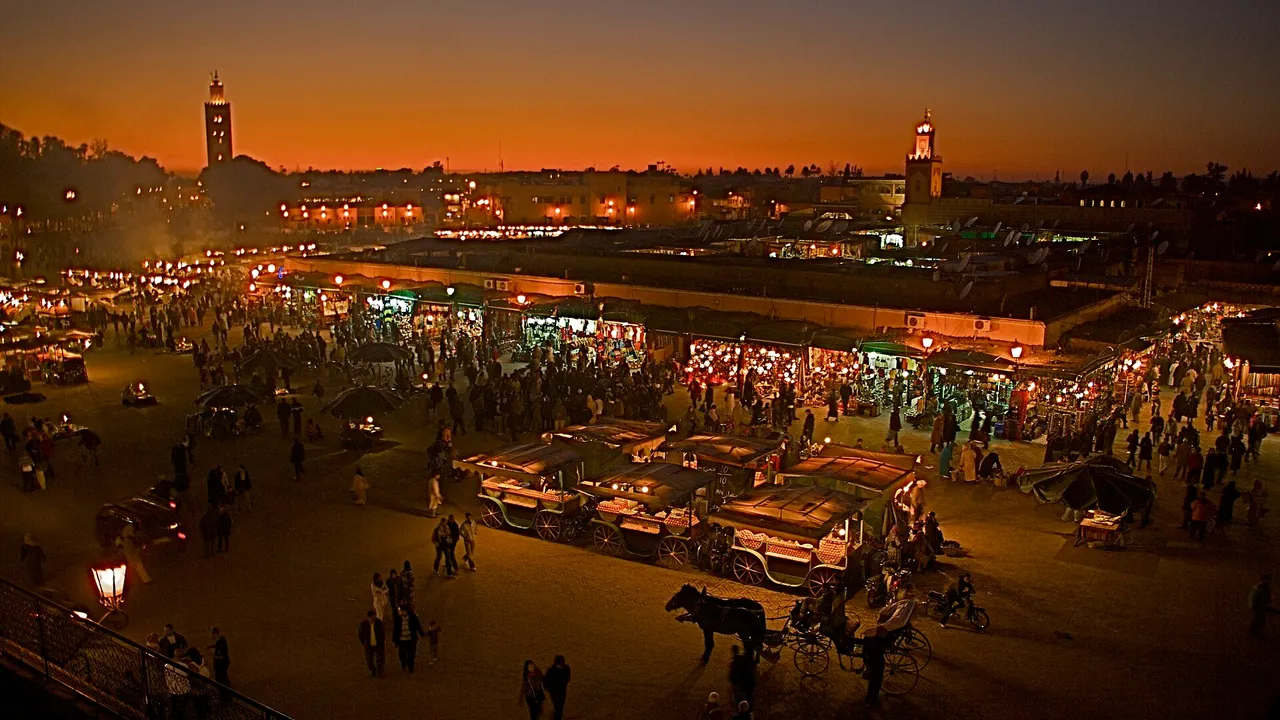
The medina souks — the historic heart, just north of Jemaa el-Fna. Their key feature: they are organised by trade. Souk Semmarine for textiles, the dyers' souk with its skeins of wool hanging overhead, Haddadine for ironwork, Chouari for wood, Attarine for brass and lanterns, and the spice souk. That organisation is a gift: once you know which trade you want, you go straight to the right alley and compare ten workshops in twenty minutes.
Gueliz — the new town, ten minutes away by car. Concept stores, contemporary designers, galleries and interiors shops that reinterpret Moroccan craft. Prices are marked, the pace is calm, the pieces are curated. It is the perfect counterpoint to the intensity of the souks.
Sidi Ghanem — the industrial district turned design quarter, north-west of the city. Former warehouses converted into showrooms: contemporary ceramics, textiles, furniture, natural cosmetics, perfumers. Many of the brands that supply European interiors houses have their studio here. You need a vehicle to get there, but this is where the best homeware finds are.
Cooperatives and village souks — along the Atlas road, one or two hours out. Women's argan oil cooperatives, Aït Ouaouzguit rugs, Tamegroute pottery. You buy as close as possible to the people who make the pieces, and you see the work being done.
What to bring home
Rugs. The signature purchase, and the most involved one. Beni Ouarain with black diamonds on undyed wool, colourful and narrative Azilal, Boucherouite woven from recycled fabric, flat-woven kilims from the south. Each has its own wool, knotting and story. It deserves a guide of its own: see how to choose a Moroccan rug.
Leather. Babouches, poufs, bags, belts. Marrakech has always worked leather. A good piece is recognisable by its smell (natural, not chemical), the evenness of the stitching and the finish of the edges.
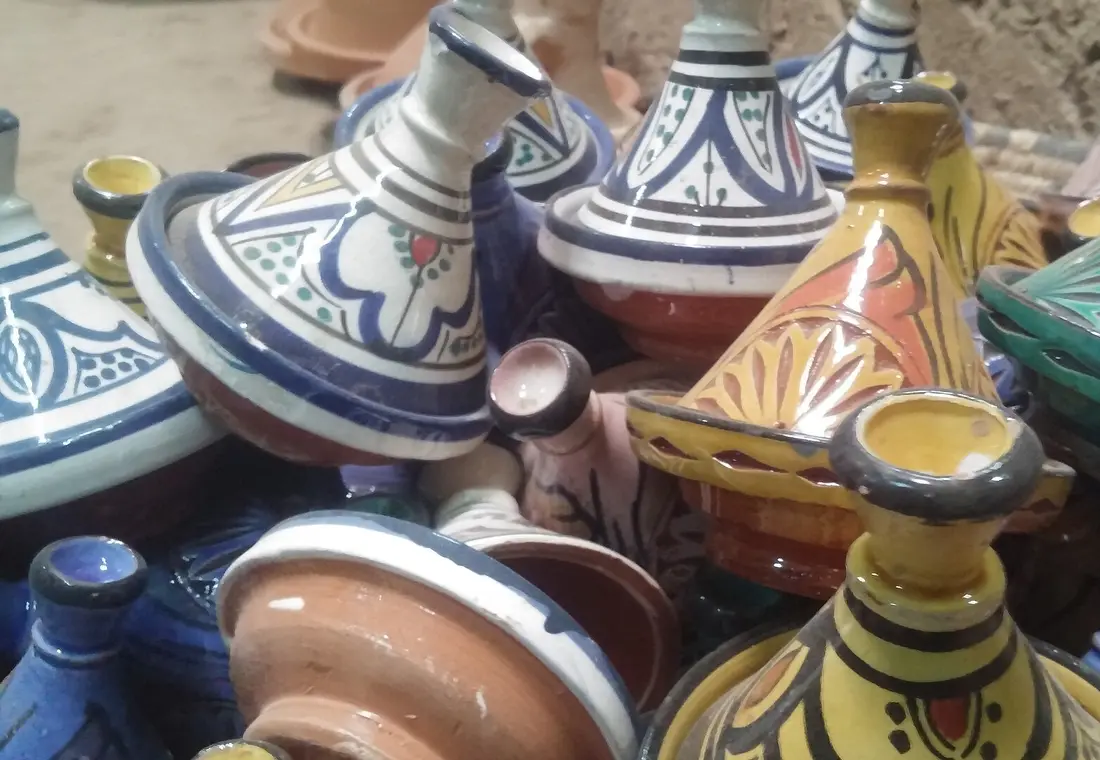
Ceramics and zellige. Dishes and tagines from Safi or Fez, hand-painted bowls, zellige tiles cut one by one. Hand-painted decoration carries very slight irregularities — that is precisely the signature of handwork.
Lanterns and metalwork. Brass and iron, chased and pierced by hand. A lantern at home throws exactly the same patterns it threw in Marrakech — it is the object that brings back the most atmosphere per kilo of luggage.
Argan oil. Two different products share the name: cosmetic oil (unroasted kernels, faint scent, for skin and hair) and culinary oil (roasted kernels, nutty taste, for cooking). Buy from a cooperative or a shop that explains the difference to you.
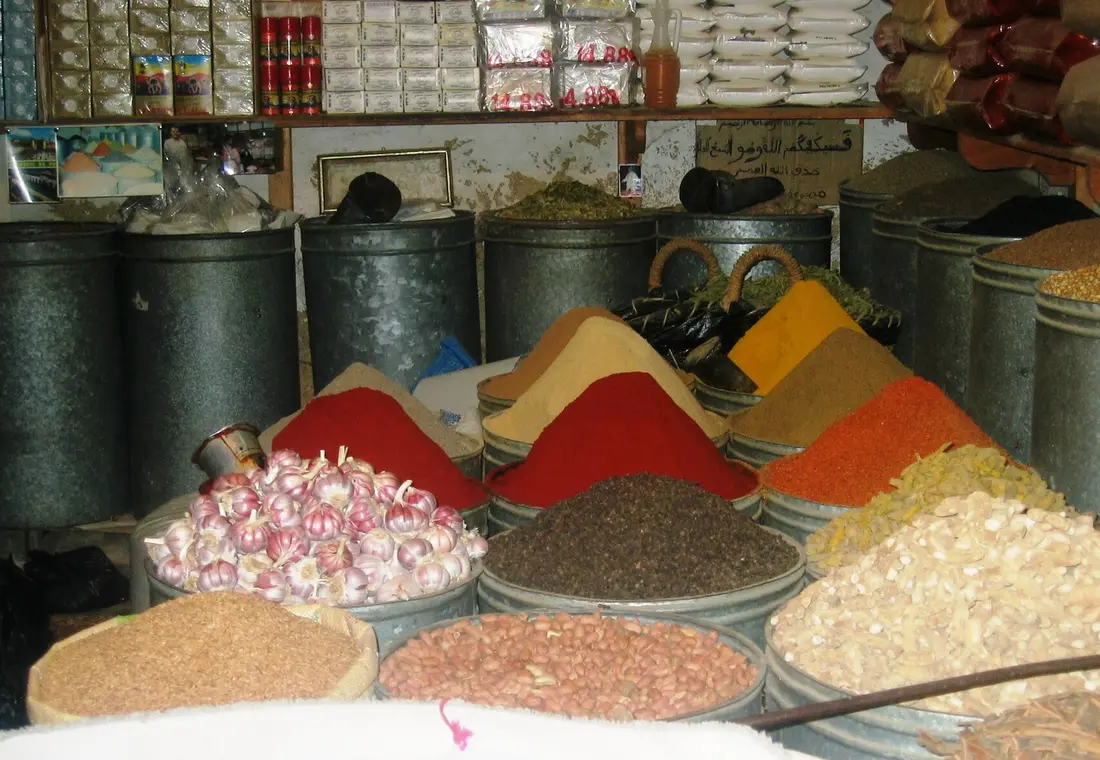
Spices. Ras el hanout, cumin, saffron, smoked paprika, tagine blends. They travel well and cost a fraction of European prices.
Thuya wood, worked in Essaouira and sold in Marrakech: boxes, trays, chess sets, with an unmistakable scent. Textiles: sequinned handira blankets, cushions, kaftans, fabric by the metre. And Berber silver jewellery, fibulae and necklaces from the Anti-Atlas.
How buying works
This is the part visitors anticipate most, and in practice it is the most enjoyable.
Buying in the souk is a conversation, not a quick transaction. You will be offered mint tea: accept it, it is the normal opening of the exchange and commits you to nothing. Several pieces will be brought out, and you will be told where they come from. Take your time to look, touch and ask questions — artisans enjoy talking about their craft, and that is usually where you learn to tell a fine piece from an ordinary one.
Bargaining is part of the ritual, on both sides, and it is done with a smile. A few simple markers: decide before you walk in what the object is worth to you; name a price you are genuinely happy to pay; stay relaxed and good-humoured; and if the numbers do not meet, thank them and move on — that is entirely normal and very common. You will often find the same family of objects three alleys further along.
Practical markers: cash in dirhams remains the simplest method in the medina (many workshops take cards, but not all); ask to see the piece in daylight; and for an important purchase, ask for an invoice — it is useful for shipping and insurance.
Getting it home
Small items (spices, argan, jewellery, thuya boxes) fit in a bag. Just watch liquids in the cabin: argan oil travels in the hold.
For a rug, a large mirror, a bulky lantern or furniture, there are two routes: established sellers arrange shipping (typically one to three weeks to Europe, with a tracking number), or you roll and wrap the rug and take it as extra checked baggage — a medium rug rolled tight travels perfectly well.
The real logistical issue of the day is not the flight: it is the day itself. Walking the medina carrying three bags, a pouf and a copper tray is the surest way to cut your shopping short.
Going with an official guide
In Morocco, law 05-12 reserves tourist guiding for holders of the professional guide card. A driver drives, drops you at the best entrances and keeps your purchases — he does not guide inside the medina.
That is why our Marrakech shopping day combines both: an official licensed guide included in the package, plus a vehicle and driver following you all day as a rolling boot. The guide knows the workshops, can read the quality of a piece, translates, and leaves you free to buy — or not buy — exactly as you wish.
The rate is per vehicle, not per person: from €160 for a half day and €235 for a full day, licensed guide included. For four people that works out around forty euros each for a fully guided day — where walking tours are usually priced per traveller.
You choose your departure time, you return when you like, and there are no forced stops and no obligation to buy.
Frequently asked questions
What is the best time of day for the souks?
Mornings between 9am and noon: the light is good, the alleys are less crowded and artisans have time to talk. Many stalls close for a few hours in the early afternoon, especially on Fridays.
Should I bargain, and by how much?
Yes — it is part of the exchange and nobody takes offence. There is no universal percentage: the right price is the one that suits you and that the seller accepts with a smile. Comparing two or three workshops before buying gives you the benchmark immediately.
Can I pay by card?
In the Gueliz concept stores and at Sidi Ghanem, almost always. In the souks it varies — carry dirhams in cash for smaller purchases.
Can I have a rug shipped home?
Yes, it is routine. Established sellers work with freight companies and give you a tracking number. Keep the invoice and photograph the wrapped parcel.
Is half a day enough for shopping?
Comfortably, if you know what you are after: half a day (around 4 to 5 hours) covers the medina and one district. If you want to add Sidi Ghanem or a cooperative on the Atlas road, take the full day.
What if I only have cabin baggage?
Spices, saffron, small bottles of cosmetic argan oil (in the hold if over 100 ml), silver jewellery, small thuya boxes, babouches, unstuffed cushion covers. All of it is light and packs anywhere.
Shopping day in Marrakech, official guide included · from 160 € per vehicle
See the shopping day →
Book in 2 minutes — fixed price, secure payment.
Get my price →Ask on WhatsApp